How to Spot a Survey Scam Before You Sign Up
Real survey panels never charge you, never ask for your bank details by text and never pay you with a check. The warning signs, and what to do if you slipped.
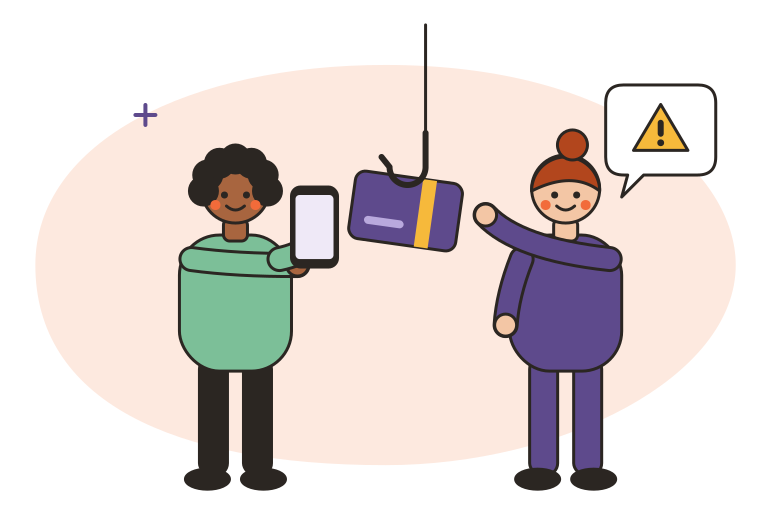
Survey scams work because the real thing is so modest. An honest panel pays a little for your time and asks for nothing back, so a scammer only has to promise a bit more, or copy a brand you trust, to look like a better deal. The good news is that almost every survey scam breaks one of a handful of rules, and you can check all of them before you type your email address.
The one rule that catches most scams
Follow the money. A real survey panel is paid by the companies that want your opinions, and it passes a small share of that on to you. Money only ever moves in one direction: toward you.
Any request that reverses that flow is the tell. A joining fee. A "premium" tier that unlocks better surveys. Shipping on a "free" reward. A deposit to release your balance. The FTC's line on prize offers is blunt: if you have to pay to get your prize, it's a scam, whether the charge is called taxes, shipping or a processing fee. Its advice on mystery shopping, a close cousin of survey work, says the same thing about jobs: honest companies pay you, they don't charge you to work for them.
It's the single most useful thing to take from this page.
The checklist before you sign up
Most of these come straight from the FTC's consumer warnings about prize, job, text and check scams. One red flag is enough to walk away. The green signals don't prove a site is safe, but a legitimate panel will usually show all of them.
The checklist before you sign up
Walk away if the site…
- Charges a fee to join, or sells you a list of survey jobs
- Asks you to pay shipping or "processing" to claim a free reward
- Asks for your card, bank account or Social Security number to claim a prize
- Sends you a check and asks you to return part of it, or buy gift cards with it
- Contacts you first by text, WhatsApp or Telegram with a job or a survey
- Wants you to deposit money, often crypto, to unlock what you've earned
- Promises a lot of money for a little work, or tells you to act now
A legit site usually…
- Free to join, with the company behind it named on every page
- Publishes its payout rules and minimum cash-out before you sign up
- Handles tax forms only inside your account, never by text
- Has a privacy policy that says what it does with your answers
- Lets you close your account and ask for your data to be deleted
The three disguises survey scams wear
The brand-name text. A message that looks like it's from a big retailer or the postal service offers a gift card or a free product for answering a few questions. The FTC has warned about exactly this pattern: a survey to claim a freebie, followed by a request to pay for shipping. In an earlier alert about a fake vaccine survey it put it more simply: no legitimate survey asks for your credit card or bank account number to pay for a "free" reward. The questions are there to make the ask feel earned.
The quiz that collects your security answers. Your first pet, the street you grew up on, your mother's maiden name. Personality quizzes and "quick polls" can harvest the same facts banks use as security questions, and the FTC has said it has heard of scammers phishing for security-question answers through quizzes. Real market research asks about your habits and opinions, not the answers to your password resets.
The "task" job that starts small. You're contacted out of the blue, often on WhatsApp or Telegram, and offered paid work rating products or liking videos. Early on you're paid for real, which is the hook: the FTC says these schemes usually pay $5 to $20 to gain your trust. Then the platform asks you to deposit your own money, often in crypto, to unlock the next level or withdraw your balance. The FTC estimated that about 20,000 people reported task scams in the first half of 2024, against about 5,000 in all of 2023.
Why a check in the mail is never good news
Some scams run the other way and pay you first, with a check. It's larger than the amount you were promised, and you're asked to send the difference back, or to buy gift cards with it for "equipment" or "the next assignment".
The trap is timing. Your bank has to make deposited funds available quickly, so the money shows up in your account, but the FTC notes that fake checks can take weeks to be discovered. When the check bounces, you owe the bank the full amount and whatever you sent on is gone. No survey panel pays this way. They pay through PayPal, a bank transfer or a gift card code, and they never ask for anything back.
How big the problem is
Big enough that the numbers stopped sounding abstract a while ago. People told the FTC they lost more than $12.5 billion to fraud in 2024, and losses to job and employment agency scams alone went from $90 million in 2020 to $501 million in 2024. For 2025, the FTC told Congress that consumers filed 3 million fraud reports and reported $15.9 billion in losses, with text messages as the most common first contact.
The Better Business Bureau sees the same pattern from a different angle. In its 2025 Scam Tracker report, employment scams were the second riskiest scam type, with a median loss of $1,000, and they were the riskiest type of all for people aged 18 to 34. Just over half of those employment scams started with a text message.
These are reported losses, so the real totals are higher: most people never report.
Checking a panel in five minutes
You don't need to be a detective. Before you sign up anywhere:
- Find the company. The site should say who runs it and where the company is based. A panel you can't attach to a real business is one we'd skip.
- Search its name with "scam" or "complaint". That's the FTC's own suggestion. One angry review means little; the same story from many people, with dates and amounts, means a lot.
- Read the payout page. A real panel tells you the minimum cash-out and how you'll be paid before you create an account.
- Check how it contacts people. Legitimate panels warn about impersonators too. Swagbucks, for example, says it never asks for your Social Security number, bank details or passwords by text, and Prolific tells participants that legitimate studies will never request financial or highly sensitive information.
- Read the privacy policy. It should say what happens to your answers and how to delete your account. If there isn't one, that's your answer.
One nuance worth knowing, because scammers exploit the confusion: a legitimate US panel may ask for tax information once you've been paid enough in a year. For payments made from 2026 onward, the IRS raised the reporting threshold for these forms to $2,000. That request comes through your account on the panel's own website, never by text, and never as a condition for releasing a prize.
If you already clicked, paid or shared something
Don't be embarrassed about it; these schemes are built by people who do this full time. Speed matters more than anything else.
If you already clicked, paid or shared something
-
Stop the money first
Call your bank, card issuer or the payment app you used and ask them to stop or reverse the payment. For gift cards, call the number on the back of the card and keep the card and the receipt.
-
Change the password you gave away
If you entered a password on a fake page, change it wherever you use it and turn on two-factor authentication.
-
Protect your identity
If you shared your Social Security number, go to IdentityTheft.gov for a recovery plan.
-
Report it
File a report at ReportFraud.ftc.gov and forward scam texts to 7726. Your state attorney general takes complaints too.
Watch for the follow-up. People who lost money are often contacted by someone offering to recover it, for a fee. That's the same scam, second round. The FBI's crime reporting center says it will never contact you directly for information or money.
Our take
We'd rather you lost a few minutes checking a panel than a few hundred dollars trusting one. Choose where to sign up yourself, from a list of panels whose rules you can read, and treat every unexpected survey offer, however friendly the brand name, as fake until you've proved otherwise on the company's own website.
You asked
Is it a scam if a survey site asks for my Social Security number?
Not always, but the setting tells you. Legitimate US panels may ask for tax details (a W-9) inside your account once your payments reach the IRS reporting threshold. They won't ask by text, by email link, or as a condition for claiming a prize. A survey question asking for your SSN is a reason to leave.
I got a text from a big store offering a gift card for a quick survey. Is it real?
Treat it as fake. The FTC has warned about texts that use the names of well-known brands to offer a free item for a survey, then ask for a shipping fee. If you want to check, go to the store's website yourself instead of using the link.
A site paid me a few dollars at the start. Doesn't that prove it's legit?
No. Task scams often pay small amounts early to win your trust, then ask you to deposit your own money to keep going or to withdraw your balance. Being asked to pay to get paid is the signal that matters.
Can I get my money back?
Sometimes, and speed matters. Card payments have the strongest protections. Bank transfers, payment apps and gift cards can occasionally be stopped if you call right away. Crypto is the hardest to recover. Be wary of anyone who contacts you offering to recover the money for a fee: that is a second scam.
Read next
Privacy and Paid Surveys: What Happens to Your Data
Survey panels pay you partly for your data. What Swagbucks, Survey Junkie, YouGov, Prolific and Branded Surveys say they collect and share, and how to limit it.
How Much Time Do Surveys Really Take? A Realistic Look
The minutes on a survey invitation only count the survey itself. Where the rest of your time goes: screen-outs, overruns, waiting and payout delays.
Paid Surveys: How They Work and What You Can Realistically Earn
Survey sites pay in points and small amounts, not wages. Where the money comes from, published rates, cash-out rules and why screen-outs matter so much.